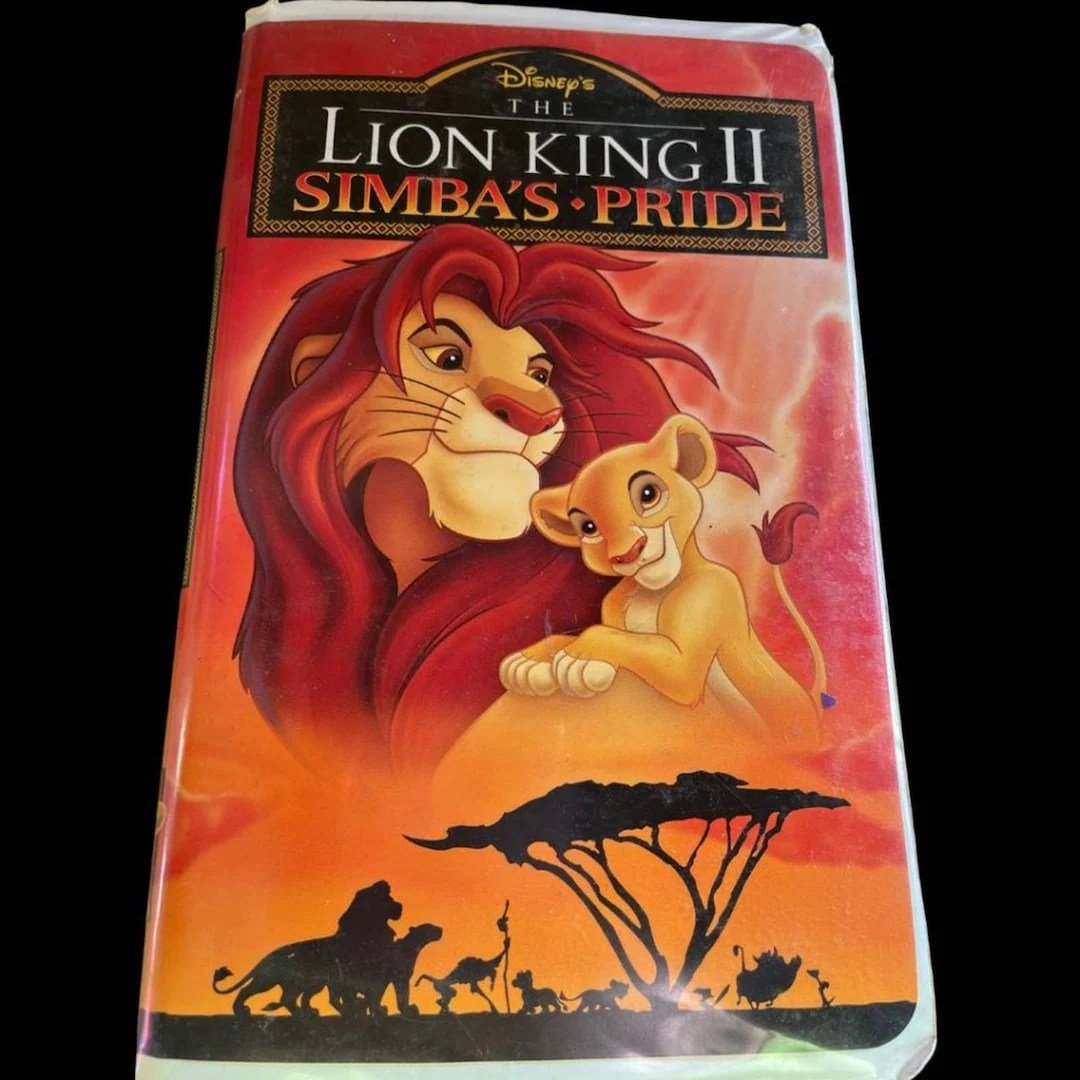
Kiara's Role in The Lion King II: Simba's Pride Unites Divided Prides
When we talk about The Lion King legacy, Simba's journey is often at the forefront. But for many, the story truly gained a crucial layer of depth with its 1998 sequel, The Lion King II: Simba's Pride. This direct-to-video musical drama wasn't just another chapter; it introduced us to Kiara, Simba and Nala's spirited daughter, whose destiny was to bridge a chasm of prejudice and hatred that threatened to tear the Pride Lands apart. Her story isn't just a continuation; it’s a powerful exploration of unity, forgiveness, and finding your own path, heavily inspired by Shakespeare's classic Romeo and Juliet.
Kiara's pivotal role in Simba's Pride is far more than just "Simba's daughter." She is the central figure, the protagonist whose burgeoning love for Kovu, a lion from the exiled Outsider pride, forces both her family and the entire Pride Lands to confront their deep-seated biases. Her journey from a curious, sometimes reckless cub to a wise, unifying queen is the very heartbeat of this compelling sequel.
At a Glance: Kiara's Unifying Journey
- Who is Kiara? Simba and Nala's firstborn daughter, destined to rule the Pride Lands.
- Central Conflict: Kiara falls for Kovu, an Outsider cub raised by Scar's vengeful mate, Zira, creating tension between the Pridelanders and the exiled Outsiders.
- Her Defining Role: Kiara actively challenges her father's prejudice and her pride's hatred, working with Kovu to achieve peace.
- Key Themes: Unification over division, breaking cycles of hate, choosing love, fulfilling destiny, and overcoming parental expectations.
- Impact: Through her actions, Kiara ultimately brings the two warring prides together, securing a future of harmony for the Pride Lands.
The Dawn of a New Era: Introducing Kiara to the Pride Lands
Our introduction to Kiara mirrors the iconic opening of the first film. She is presented as the newborn daughter of King Simba and Queen Nala, a beacon of hope and the next in line to rule the flourishing Pride Lands. This presentation, however, carries a heavier weight than Simba's did; the shadow of Scar's reign and the subsequent exile of his followers already looms large, even as the new cub is welcomed.
As she grows, Kiara quickly distinguishes herself as a spirited, independent cub, inheriting her father's adventurous streak but often chafing under his overprotective gaze. Simba, scarred by his past and the loss of Mufasa, is determined to shield Kiara from all dangers, particularly the barren, forbidden Outlands where Scar's followers were banished. This paternal anxiety, while understandable, inadvertently sets the stage for Kiara's rebellious curiosity. She finds Timon and Pumbaa's constant chaperoning tiresome, viewing it as an obstacle to her innate desire for exploration and understanding. It's this very yearning for freedom that drives her beyond the safety of the Pride Lands, unknowingly propelling her towards her destiny.
A Forbidden Friendship: Kiara Meets Kovu
Kiara's ventures into the Outlands, despite Simba's warnings, lead her to a fateful encounter that changes everything. Here, amidst the stark, desolate landscape, she meets Kovu, a cub from the Outsider pride. From the outset, their meeting is fraught with danger, as they narrowly escape a crocodile attack together. This shared moment of peril quickly forges an unexpected bond between them, a pure, innocent friendship untainted by the historical animosity of their respective prides.
This burgeoning friendship is abruptly interrupted by the arrival of their parents. Simba, furious at Kiara's disobedience and the presence of an Outsider, confronts Kovu and his mother, Zira. Zira, Scar's most loyal follower, is a formidable and vengeful leader, and her presence immediately reignites Simba's deep-seated prejudice against the Outsiders. He sees them only as Scar's heirs, a threat to his kingdom and his family. In this moment, Kiara receives her first direct lesson from Simba on the responsibilities of queenship and the importance of unity—an ironic lecture given his own rigid stance on the Outsiders. Yet, even as Simba attempts to instill caution, the seed of something new has been planted in Kiara's heart, a connection that transcends the boundaries drawn by hatred.
A Prophecy, a Plot, and the Power of Upendi
Unbeknownst to Simba, Zira has a sinister scheme brewing. She sees Kovu's encounter with Kiara not as an accident, but as an opportunity. Secretly, she trains Kovu as an assassin, planning to use his "friendship" with Kiara to infiltrate the Pride Lands, kill Simba, and seize the throne for her own pride. This manipulative plot is the driving force behind much of the initial narrative tension, painting Kovu as a pawn in a much larger game of revenge.
Yet, there's a higher power at play. The spirit of Simba's late father, Mufasa, has a different vision. He intends for Kiara and Kovu to unite the Pridelanders and Outsiders, a destiny that runs counter to Zira's vengeful plot. This divine intervention suggests that their connection is not merely coincidence but a fated bond meant to heal old wounds.
Years later, as adolescents, this destiny begins to unfold. During Kiara's first solo hunt, a wildfire, cunningly ignited by Kovu's older siblings, Nuka and Vitani, puts her in grave danger. Kovu, acting on Zira's instructions but also perhaps on a burgeoning conscience, rescues her. This act of heroism, despite Simba's deep suspicion, forces him to reluctantly accept Kovu into the Pridelanders, albeit with a wary eye.
During hunting training, Kiara and Kovu spend more time together, and their childhood bond deepens into something profound. Kovu begins to question his mission, torn between his mother's expectations and his growing feelings for Kiara. It is during this time that he reveals a crucial detail: he is not Scar's biological son, a fact that subtly undermines Zira's claims to the throne through him.
Simba's wise advisor, Rafiki, sensing the true nature of their connection, guides Kiara and Kovu to the mystical jungle, a place of vibrant growth and new beginnings. Here, they experience "upendi," the Swahili word for love, solidifying their romantic bond. Their love story becomes the ultimate counter-narrative to Zira's hatred. Nala, ever the voice of reason and compassion, plays a crucial role in convincing Simba to allow Kovu to spend the night at Pride Rock, a symbolic step towards acceptance. However, Vitani, always loyal to Zira, secretly observes this closeness and reports Kovu's perceived "failure" to kill Simba, further tightening the noose of Zira's plot. This moment illustrates how animation studios collaborate on a big Disney project to bring such nuanced character interactions to life.
Betrayal, Exile, and the Brink of War
Simba, still struggling with his mistrust, attempts to show Kovu the beauty and history of the Pride Lands, clarifying the truth about Scar's manipulative and destructive nature. He hopes to sway Kovu away from Zira's influence. However, their conversation is tragically interrupted. The Outsiders, orchestrated by Zira, ambush Simba. In the chaos of the ensuing battle, Nuka is killed, desperately trying to prove himself to his mother, and Simba narrowly escapes, convinced that Kovu has betrayed him. This ambush, perfectly timed, seals Kovu's fate in Simba's eyes.
Kovu, horrified by the ambush and his brother's death, confronts Zira, pleading for Simba's forgiveness and denying any involvement. But Zira's hatred is absolute; she sees his compassion as weakness and rejects him. Returning to Pride Rock, Kovu attempts to explain his innocence, but Simba, blinded by grief and renewed prejudice, exiles him. The scene is heartbreaking, as Kovu is cast out by both sides, a victim of a war he never wanted to fight. This episode showcases the strategic shift towards direct-to-video sequels allowed for deeper, more character-driven narratives like this.
Kiara, witnessing her father's irrationality and the pain it inflicts, realizes that she must take matters into her own paws. Defying Simba's orders, she leaves Pride Rock to find Kovu, her conviction in their love and their shared purpose unwavering. Her departure marks a critical turning point, signifying her full embrace of her destiny as a leader who prioritizes unity above all else.
Kiara's Defining Moment: Uniting the Prides
Kiara and Kovu’s reunion is a powerful moment, symbolizing their resilience and unwavering commitment to each other and their shared vision of peace. Together, they return to the Pride Lands, where the Pridelanders and Outsiders are on the brink of an all-out war. Kiara, with Kovu by her side, makes a impassioned plea, calling for an end to the senseless fighting. She challenges the ingrained hatred, reminding both prides that they are "one," regardless of their past allegiances.
"We are one," she declares, echoing Mufasa's wisdom about the circle of life. Her words resonate, and even Vitani, initially loyal to Zira, sees the truth in Kiara's message and crosses the divide to join the Pridelanders. One by one, the other Outsiders follow, swayed by Kiara's courage and the undeniable truth of her vision.
Zira, however, remains consumed by her vengeance. In a final, desperate act, she attempts to attack Simba. Kiara intervenes, saving her father, and in the ensuing struggle, Zira falls off a cliff into the raging river below, choosing to cling to her hatred rather than accept Kiara's outstretched paw. Her death marks the definitive end of the cycle of revenge.
With Zira gone, Simba, finally seeing the wisdom in Kiara's actions and the depth of his own prejudice, welcomes the remaining Outsiders, including Kovu, into the Pride Lands. This moment of unification is the culmination of Kiara's journey, achieving the harmony Mufasa had intended. A celebratory roar echoes across Pride Rock as Mufasa's spirit congratulates Simba, acknowledging Kiara's success in forging a new, unified kingdom. For deeper dives into iconic Lion King characters, Kiara's evolution stands out as a testament to growth and leadership.
Behind the Scenes: Crafting Simba's Pride
The development of The Lion King II: Simba's Pride began shortly after the phenomenal success of its predecessor. Discussions for a direct-to-video sequel started as early as May 1994, a strategic move by Disney to capitalize on the original film's popularity and tap into the burgeoning home video market. Darrell Rooney directed the film, with Jeannine Roussel producing, aiming to deliver a story that resonated with the themes of family and responsibility.
The creative process saw several character changes. Originally, Simba's daughter was named Aisha before being renamed Kiara, a role beautifully voiced by Neve Campbell in her adolescence and Michelle Horn as a cub. The character of Binti (Zazu's girlfriend, voiced by Jane Leeves) and Cheech Marin's character Banzai were cut from the final script. A particularly "heated discussion" among Disney executives revolved around Kovu's lineage; he was initially conceived as Scar's biological son, a plot point that would have carried significantly different implications. Ultimately, the decision to make him an adopted son, raised by Zira, paved the way for the Romeo and Juliet-inspired narrative that defines the film. Matthew Broderick returned as the voice of Simba, lending continuity to the beloved character, while Edward Hibbert took over from Rowan Atkinson as Zazu. Jim Cummings stepped in for Jeremy Irons as Scar (in flashback voiceovers), and Andy Dick provided the distinct voice for Nuka.
The animation for Simba's Pride was primarily handled by Walt Disney Television Animation in Sydney, Australia, showcasing the often-mixed critical reception of Disney sequels often reflects differences in animation style. Additional animation work was contributed by Disney's Canadian animation studio and Toon City in Manila, Philippines, with storyboarding taking place in Burbank, California. This global collaboration was key to bringing the vibrant world of the Pride Lands and the starkness of the Outlands to life. The film was confirmed for an October 27, 1998, release, signaling Disney's confidence in its direct-to-video strategy.
The Voice Behind Kiara and Co.
The casting for Simba's Pride brought back many familiar voices while introducing new talent to carry the story forward:
- Kiara: Neve Campbell (adolescent), Michelle Horn (cub)
- Kovu: Jason Marsden (adolescent), Ryan O'Donohue (cub)
- Simba: Matthew Broderick
- Nala: Moira Kelly
- Timon: Nathan Lane
- Pumbaa: Ernie Sabella
- Zira: Suzanne Pleshette
- Nuka: Andy Dick
- Vitani: Lacey Chabert (adolescent), Ashley Edner (cub)
- Rafiki: Robert Guillaume
- Zazu: Edward Hibbert (replacing Rowan Atkinson)
- Scar: Jim Cummings (replacing Jeremy Irons)
- Mufasa: James Earl Jones (archival recordings)
The vocal performances, particularly Campbell's portrayal of Kiara's blend of determination and vulnerability, and Marsden's conflicted Kovu, were instrumental in making their love story believable and compelling.
Box Office Roar and Critical Purrs: Reception and Impact
The Lion King II: Simba's Pride proved to be a resounding commercial success, solidifying Disney's direct-to-video strategy as a viable and profitable venture. A comprehensive promotional campaign, including tie-ins with major brands like McDonald's, Mattel, and Lever 2000, built significant anticipation for its release. The film premiered on October 21, 1998, at the Wadsworth Theatre, before its widespread VHS release in the US and Canada on October 27, 1998.
Disney initially shipped an impressive 13 million copies, and the sales figures quickly reflected its popularity: 3.5 million VHS copies were sold within the first three days alone. By September 2001, it had sold over 15 million copies. Consumer spending on the film reached approximately $300 million, and by 2005, worldwide sales and rentals totaled an astounding $464.5 million, making it one of the top-selling direct-to-video releases of all time. This success demonstrated the immense enduring appeal of The Lion King franchise and the public's eagerness for more stories from the Pride Lands. This helped define a full overview of The Lion King trilogy's commercial success.
Critically, Simba's Pride received generally positive reviews, though it seldom reached the artistic heights or widespread acclaim of its cinematic predecessor. Rotten Tomatoes reports an approval rating of 67% based on 12 reviews, with an average rating of 6.1/10. Legendary critics Siskel & Ebert gave it "two-thumbs up," calling it a "satisfactory sequel" but noting that the music was "lacking" compared to the original.
TV Guide rated it 2½ out of four stars, acknowledging it as "slightly higher quality" than other Disney direct-to-video sequels, but still falling short of the original, particularly in its musical and artistic execution. Joe Leydon of Variety praised its "across-the-board appeal," while Caryn James of The New York Times described it as "derivative, but... winning on its own." Other reviewers echoed these sentiments, often commending the story's emotional core and character development, particularly Kiara's, while pointing out shortcomings in animation detail, song originality, and overall visual grandeur compared to the original. Some critics found the plot "predictable" and expressed a preference for Simba as a protagonist over Kiara. Despite these mixed artistic critiques, the film's commercial triumph underscored its ability to captivate audiences and continue the beloved saga.
Kiara's Legacy: Simba's Pride in the Wider Lion King Universe
The Lion King II: Simba's Pride did more than just tell a story; it significantly expanded the universe of the Pride Lands and set the stage for future installments. The film's musical contributions were also notable, with a CD titled "Walt Disney Records Presents: Return to Pride Rock: Songs Inspired by Disney's The Lion King II: Simba's Pride" released on September 8, 1998, featuring both film songs and additional tracks by Lebo M., who was integral to the original film's sound.
The success of Simba's Pride led to further explorations of the Lion King universe:
- The Lion King 1½ (2004): This prequel/sidequel offered a comedic look at the events of the first film through the eyes of Timon and Pumbaa, further expanding the franchise's narrative possibilities.
- The Lion Guard (2015-2019): This popular animated TV series on Disney Junior introduced Kiara's younger brother, Kion, as the leader of the Lion Guard. The series takes place chronologically between Kiara's cubhood and young adulthood, with characters like Kovu, Vitani, Nuka, and Zira making appearances. Jason Marsden, Lacey Chabert, and Andy Dick reprised their roles, while Nika Futterman replaced the late Suzanne Pleshette as Zira. Kion's absence from Simba's Pride is explained in the series by his journey to the Tree of Life, skillfully integrating the show into the existing lore.
- Mufasa: The Lion King (2024): Kiara is confirmed to appear as a major character in this upcoming film, which serves as a prequel/sequel to the 2019 photorealistic adaptation. Her continued presence in new media underscores her enduring importance to the franchise's evolving narrative.
- Video Game (1998): A video game based on the film was also released, allowing fans to engage directly with Kiara's adventure.
Kiara's story, therefore, isn't just a standalone sequel; it's a foundational piece that has enriched and diversified the entire Lion King saga, influencing subsequent productions and maintaining the franchise's relevance for new generations.
Beyond the Horizon: What Kiara's Journey Teaches Us
Kiara's role in The Lion King II: Simba's Pride transcends that of a mere princess or future queen. She is a symbol of hope, a catalyst for change, and a powerful voice for unity in a world fractured by historical grievances. Her journey teaches us several profound lessons that resonate far beyond the animated Pride Lands.
First, Kiara shows us the power of challenging inherited prejudice. She refuses to accept the long-standing hatred between the Pridelanders and the Outsiders as an immutable truth. Her love for Kovu forces her, and eventually her father, to look past superficial differences and see the shared humanity—or "lion-ity"—beneath. This is a crucial lesson in our own world, where cycles of division often persist simply because no one dares to question them.
Second, her story emphasizes the importance of forgiveness and breaking cycles of vengeance. Zira's tragic end is a stark reminder of what happens when hatred is allowed to consume. Kiara, in contrast, offers an alternative: an outstretched paw, a plea for understanding, and the courage to welcome former enemies. She shows that true strength lies not in perpetuating conflict, but in the capacity for empathy and reconciliation.
Finally, Kiara's path is a testament to finding your own destiny, even when it diverges from expectations. Simba wanted her to be a safe, protected heir, but Kiara forged a different path, one that required courage, independence, and a willingness to defy her father's fears. She didn't just inherit the throne; she earned it by uniting her people and fulfilling a destiny far grander than mere succession.
In the end, Kiara's Role in The Lion King II: Simba's Pride is a compelling narrative about a young lioness who, through love and conviction, saves her kingdom not with claws and roars, but with an unwavering belief in unity. Her legacy is one of peace, demonstrating that even the deepest divides can be bridged by those brave enough to reach across them.
Untuk pemahaman lebih lengkap, baca panduan utama kami: Your guide to Lion King Kiara